
Also from True Dream
Inclusive swimming
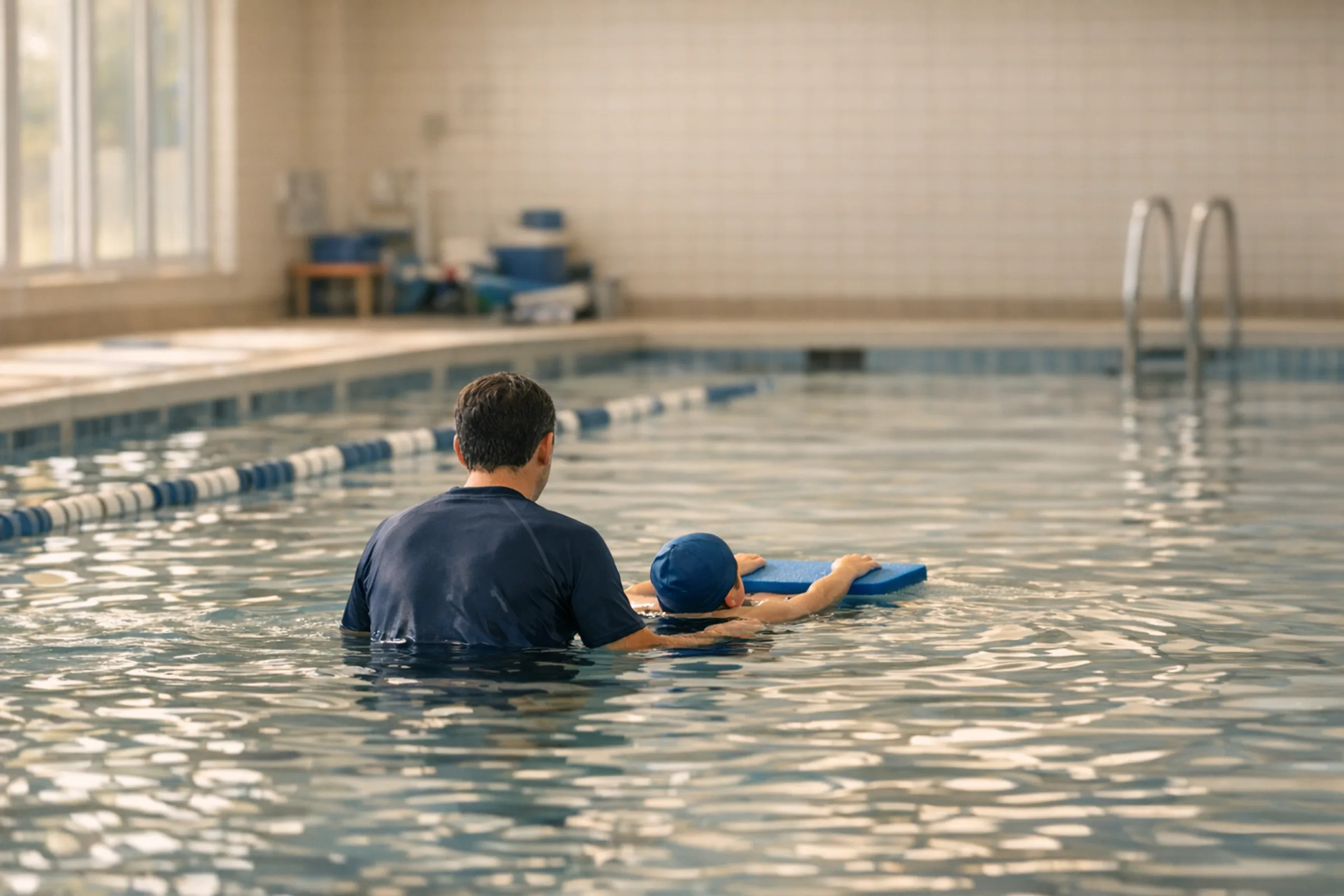
Swimming lessons for children, teenagers and adults — and a specialism in teaching autistic swimmers and those with Down syndrome, ADHD or global developmental delay. Taught in small steps, at each swimmer’s own pace, and never by pushing anyone through fear.
The one rule
Feeling safe in the water comes before speed or perfect technique.
Who it is for
Every swimmer — and especially the ones who need more time.
Children, teenagers and adults: first-timers, nervous swimmers coming back after a fright, and people who simply never learned. Lessons are adjusted to each swimmer's confidence, communication and current ability, so a nervous seven-year-old and an adult who never learned start in different places, at different speeds, with the same patience.
A specialism, not a footnote
Teaching swimmers with additional needs is the part we have practised most.
Many pools will accept a child with additional needs and then teach them exactly the way they teach everyone else. That is usually where it goes wrong. These lessons are arranged the other way round: one to one by default, broken into smaller steps, shown rather than explained, and paced so that nobody is moved on before they are ready.
Autism, at every level of support
Including swimmers who do not use speech, and those for whom noise, echo, splashing or water on the face is the real obstacle long before swimming is. Routines stay the same week to week, because predictability is what makes a pool bearable before it becomes fun.
Down syndrome
The foundations — floating, body position, breathing — are given the time they actually need rather than the time a syllabus allows, and nothing is skipped to keep pace with a group.
ADHD
Short, clearly bounded steps, and a lesson that never depends on holding a long spoken instruction in mind while also staying afloat.
Global developmental delay
Progress is measured against where this swimmer started, not against an age chart. A small step held confidently counts for more than a big one that has to be retaught next week.
This is not a checklist, and we do not teach to a label. If your swimmer's needs are not named here, ask us — and if we are not the right people for them, we will say so plainly rather than take the booking.
What we work on
Foundations first, strokes when they are ready.
Where a swimmer starts depends on what they can already do safely. Nobody is rushed on to strokes before the water feels safe.
Water confidence
- Getting in and out of the water safely
- Breathing
- Floating
Body and movement
- Body position
- Kicking
- Coordination
Swimming
- Progressive strokes, once the foundations are secure
How lessons are taught
The same patience we bring to reading.
Smaller steps
Instructions are broken down, so a swimmer is only ever working on one manageable thing at a time.
Shown, not just told
Skills are demonstrated visually and practised in predictable routines, which suits learners for whom spoken instructions alone are hard to hold onto.
Paced, never forced
A swimmer is encouraged, but never shamed or pushed through fear. Progress is paced carefully, because a frightening lesson sets a nervous swimmer back further than a slow one.
Safety and suitability
We take water safety seriously, for every swimmer.
That is why nobody is placed in a lesson before a suitability review.
Get in touch
Tell us about the swimmer: age, experience in the water, and anything that helps us understand how they learn.
Suitability review
We look at the swimmer's needs and safety requirements before offering a place. Where someone starts depends on what they can already do safely.
Placement confirmed
Placement also depends on venue rules and instructor availability, so the details are confirmed with you before anything is booked.
Lessons begin
Starting from water confidence, at the swimmer's own pace.
Fees
Contact us
Lessons are one to one and last 45 minutes; group lessons are considered case by case. Fees depend on the venue, and are confirmed with you before anything is booked.
Pricing & packages →To be clear
Swimming lessons, not therapy.
We teach swimming. We do not offer aquatic therapy or make health or medical claims, and inclusive swimming is separate from our dyslexia intervention programmes.
About dyslexia support →Questions people ask
About inclusive swimming.
Is this swimming therapy?
No. These are swimming lessons, taught with the patience and structure that neurodivergent learners and nervous swimmers often need. We do not offer aquatic therapy and do not make health or medical claims about swimming.
Do you teach children with autism, Down syndrome or ADHD?
Yes — swimmers with additional needs are a large part of who we teach. Autistic swimmers at every level of support, children with Down syndrome, ADHD or global developmental delay, and swimmers whose needs do not have a tidy label. Lessons are one to one by default, which is what makes it possible. Tell us about the swimmer when you get in touch and we will be honest about whether we are the right fit.
My child has no additional needs. Are these lessons still for us?
Yes. Many of our swimmers are simply children or adults learning to swim, or nervous ones who want an unhurried teacher. The patience was built for the swimmers who need it most, and it turns out to suit everyone.
My child is frightened of the water. Can you help?
Often, yes — that is exactly the swimmer these lessons are paced for. Nobody is pushed through fear. Feeling safe in the water comes first, and the swimming follows from there.
Do you teach adults?
Yes. Lessons are for children, teenagers and adults, and are adjusted to each swimmer's confidence and current ability.
Does my child need to be in a True Dream reading programme?
No. Inclusive swimming is separate from our dyslexia intervention programmes, and anyone can enquire about it on its own.
Where are lessons held, and how long are they?
Lessons are one to one and last 45 minutes; group lessons are considered case by case. The venue and timing depend on the swimmer's needs, venue rules and instructor availability, so we confirm them with you after the suitability review, before anything is booked.
Start here
Tell us about the swimmer.
Age, experience in the water, and anything that helps us understand how they learn. We will come back to you about suitability, venue and timing.