
One to one, at the centre
Individual Dyslexia Intervention
The same structured teaching, with nothing held for anybody else. Sixty minutes in which the pace, the pauses and the reteaching are decided entirely by your child.
Individual intervention
RM120 per session
Fit
When one to one is the right call.
It is the more expensive option, so it is worth being clear about when it is actually the better one.
The gap is wide
Where a child is far enough behind that no running group is a genuine match, individual sessions let them start exactly where they are rather than somewhere approximately near it.
A shared room is hard right now
Anxiety about reading aloud, or attention that a group setting makes harder to hold, can make a group counterproductive — not forever, but for now.
Something else needs undivided attention
A co-occurring need, a specific gap that needs unpicking, or a child who has stopped trying in front of other people and needs to rebuild somewhere private first.
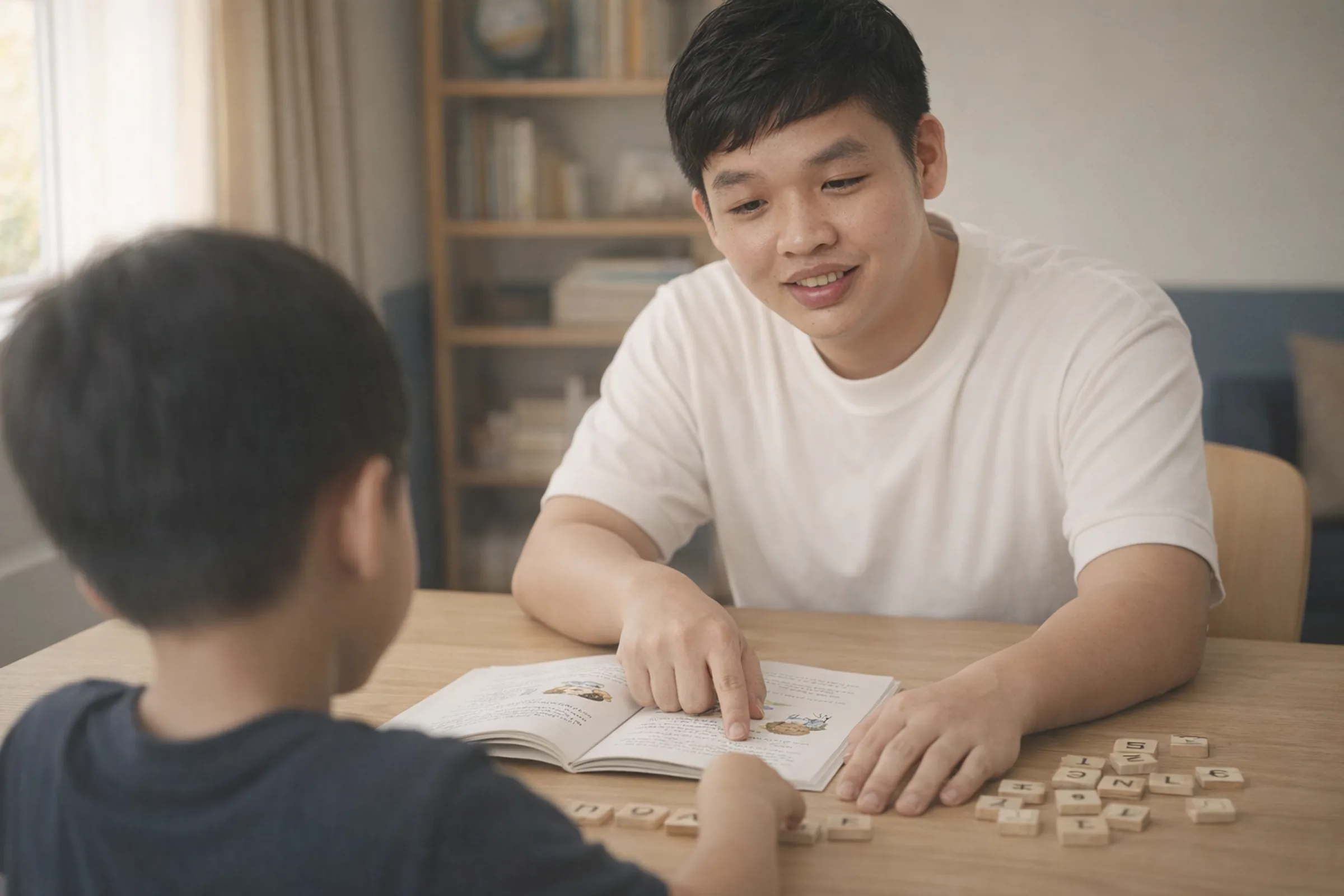
The difference
What the extra attention buys.
The pace is entirely theirs
Nothing is held for another child, and nothing moves on before it is secure. When a pattern needs three sessions rather than one, it gets three.
Every error is caught
In a group an interventionist is listening to five readers. One to one, no misread word slips past and gets practised wrong.
We can stop and reteach
If it becomes clear halfway through that something earlier was never secure, we go back to it in that session rather than at the end of the term.
The method itself does not change between one to one and a group. How we teach reading →
Later
Usually a starting point, not a destination.
Individual sessions are a starting point, not a destination. The aim is for your child to move on, when they are ready, into a matched group of no more than five, working with different teachers alongside other children. That step turns skills learned with one adult into skills a child can use anywhere, and it builds independence. We review readiness with you every six months, rather than waiting to be asked.
Availability
How a one-to-one slot comes free.
One-to-one time is arranged around your child and the interventionist’s timetable rather than around a group forming, so availability depends on the slot. Tell us roughly when you could come and we will tell you what is open.
Questions parents ask
About one-to-one sessions.
Is one-to-one better than the small group?
Not automatically, and we say so even though it costs you more. For a child who is losing confidence faster than skill, a matched group often does something one-to-one cannot — four other children visibly finding the same thing hard. The assessment is what decides, not the price list.
Will my child always work with the same person?
Yes, while they are in individual sessions. Continuity matters in this work, because so much of the progress rests on a child trusting the adult enough to be wrong in front of them. When they later move into a group they will work with different teachers on purpose — that is part of learning to read with anyone, not just with one person.
Can we move into a group later?
Yes — that is the aim. Every six months we review whether your child is ready for a matched group of no more than five, and we raise it with you at those reviews rather than waiting to be asked.
Can we do individual sessions and a group at the same time?
Not usually. We do not recommend switching between individual and group sessions unless it is written into your child's lesson plan for a specific reason. A steady arrangement is part of what makes the teaching work.
Do you diagnose dyslexia?
No. We are an educational intervention service, not a medical or psychological one. Our assessment describes how your child reads, spells and writes, and what teaching will help. If a formal diagnosis would be useful, we will say so and point you toward professionals who can carry it out.
Start here
Register, and the assessment will tell us which.
You are not committing to individual sessions by registering — only to finding out what your child actually needs. Current fee RM120 per session.