
Community Partner
Dyslexia intervention · Johor Bahru
Reading is learnable — and your child can learn it.
True Dream helps children with dyslexia and learning difficulties build stronger reading skills, confidence and independence. Small matched groups, structured teaching, and a plan built around your child.
- Small matched groups
- Maximum five learners
- Individual learning goals

What parents notice first
Most families arrive having quietly wondered for a while.
Usually it isn’t one dramatic moment. It’s a pattern that keeps repeating, long after you expected it to pass.
Reading still feels effortful, long after classmates seem to have clicked.
The same word spelled three different ways on one page.
Bright, curious, full of ideas — and then quiet the moment a book appears.
Homework that ends in tears more often than it ends finished.
Noticing a pattern is not a diagnosis — and we don’t diagnose. It is a good reason to look more closely, carefully and without alarm. That is exactly what an assessment is for. How assessment works →
Before anything else
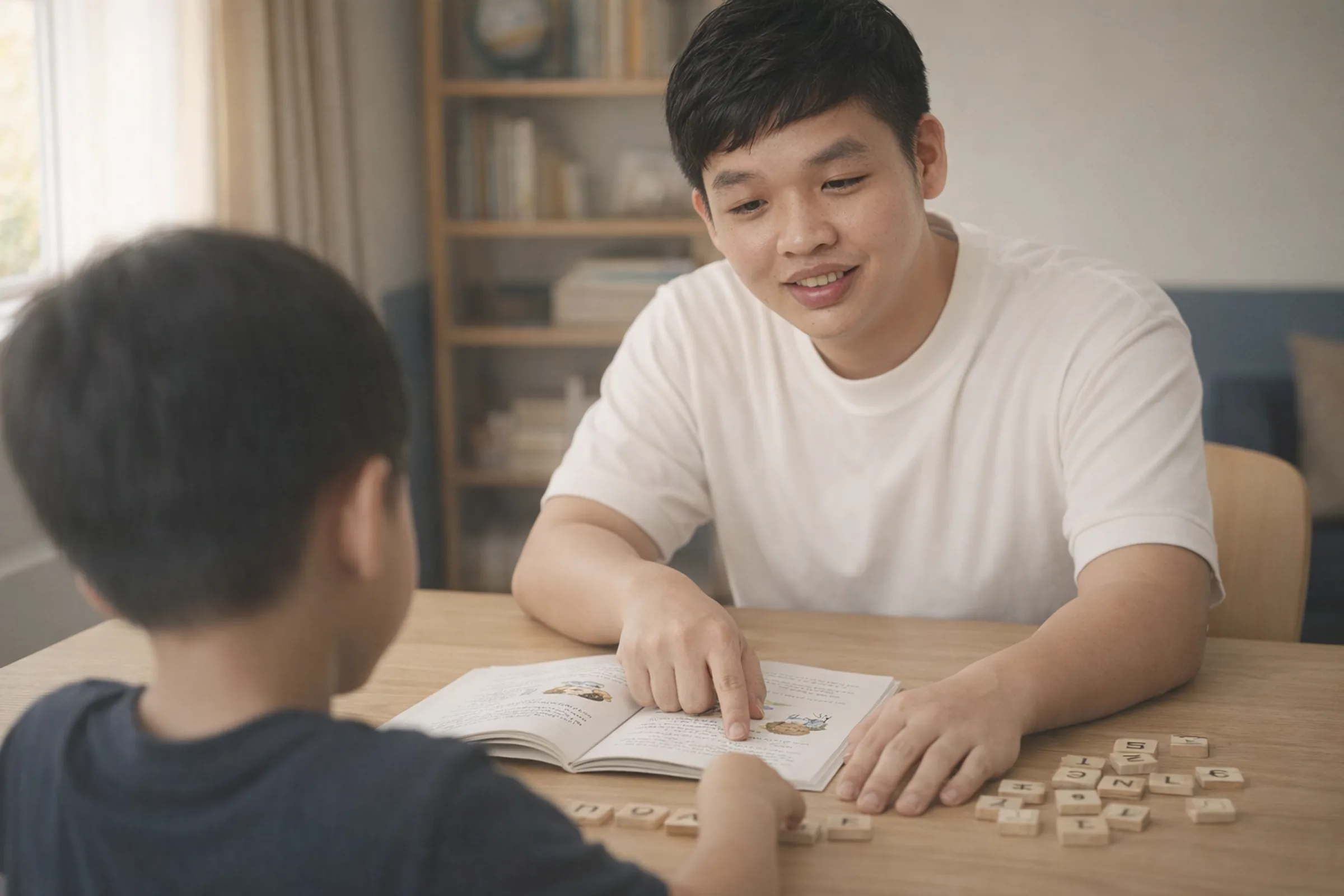
A child who believes they are stupid cannot be taught to read.
By the time most children reach us, they have already drawn a conclusion about themselves. They have watched classmates finish first for years. They have been called lazy by someone who meant well. The reading difficulty is real, but the belief built on top of it is often what makes progress impossible.
So we start by making the work survivable. Sessions are structured enough that a child knows what is coming. Difficulty is pitched so that effort is rewarded rather than punished. Mistakes are information, and we say so out loud, every time.
Confidence usually moves before scores do. Parents tend to notice it first at home — a child picking up a book without being asked, or reading a sign aloud in the car.
closed
r-controlled
closed
How we teach
We don’t ask a child to memorise words. We show them how words work.
Every word comes apart the same way — syllable by syllable, sound by sound, following rules that hold. Once a child can see the structure, they stop guessing. That is the whole method, and it is why progress carries over to words we never taught them.
Our primary programme
Small-group dyslexia intervention
Up to five learners, matched to each other — not grouped by age, or by whoever happened to enrol that month.
Five is a ceiling, not a target. A group runs at four when four is the right four. What makes it work is the matching: children at a similar decoding stage, with compatible attention and confidence profiles, so nobody is waiting and nobody is being carried.
It is where most children make their fastest gains, because they hear other children working through the same difficulty out loud. It is often the first place a child discovers they are not the only one.
Small-group intervention
RM90 per child, per session
Placement is confirmed by assessment. The assessment decides whether a group is right for your child, and which group — so registering is the first step, not the commitment.
Register My Child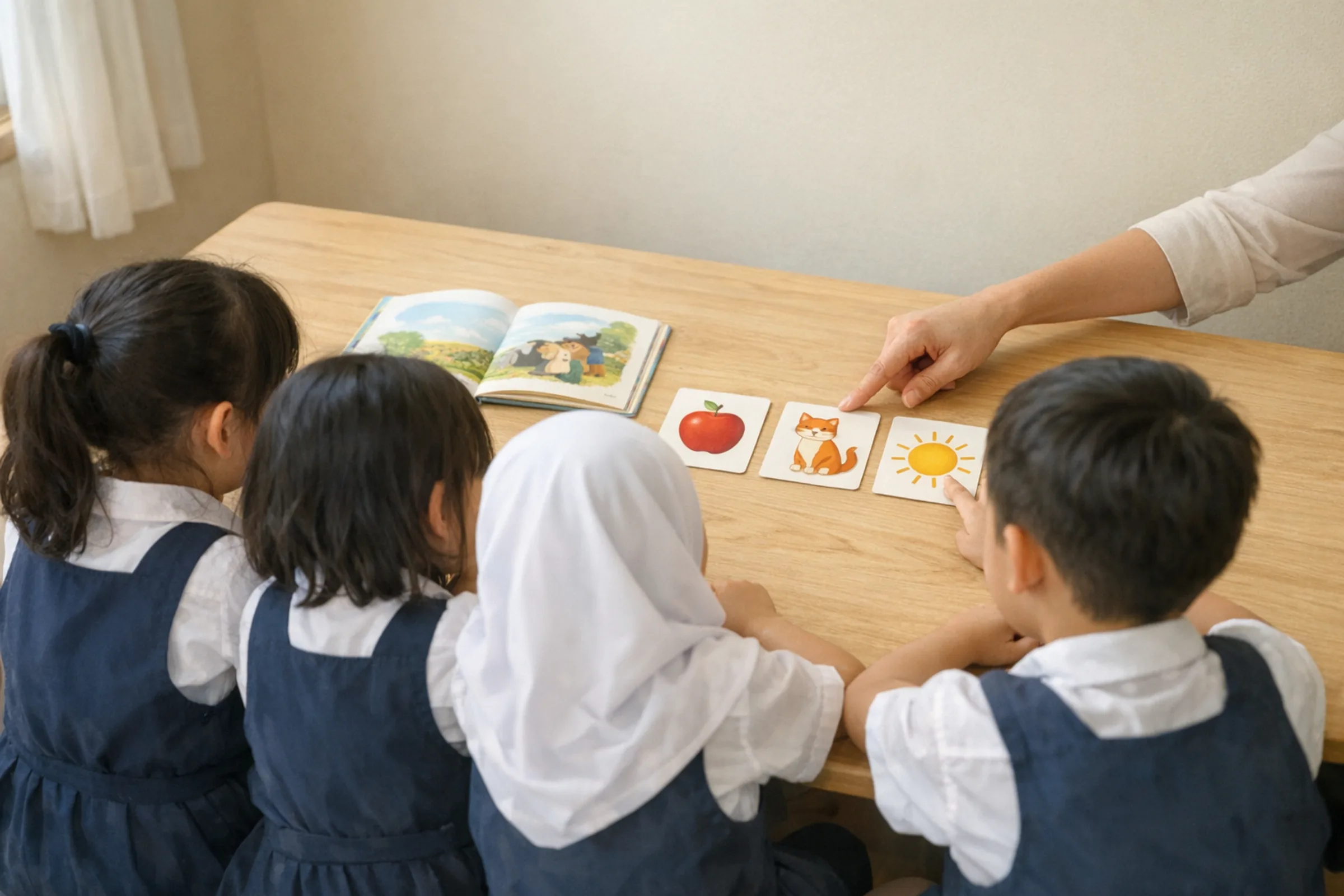
When a group isn’t the answer
Two other ways we work, when they suit a child better.
A group is not right for every child, and we would rather say so than fill a seat.
Individual intervention
One-to-one at the centre, for a child whose profile would hold a group back or be held back by one — a wide gap, or attention and anxiety that make a shared room hard right now. The same structured method, entirely at their pace.
RM120 per session · 60 minutes
About individual sessions →Home support and parent coaching
Appointment-only one-to-one in your own home, and coaching that hands you the structure to use between sessions. For families where travel is the obstacle, or where the work needs to continue at the kitchen table to stick.
Contact us · by arrangement
About home support →The assessment journey
Nothing starts until we understand your child.
Four steps, and you can stop after any of them. We would rather lose a registration than place a child in a programme that was never going to help.
You get in touch
Tell us what you have been noticing. No forms to fill in first, and no charge for the conversation.
Assessment
A structured look at how your child reads, spells and writes, and where the difficulty actually sits.
We talk it through
In plain language: what we found, what it means, and what we would recommend — including if that is not us.
Placement
If a programme fits, we match your child to the right group or to individual sessions, and set their goals.
We are an education service, not a medical one. Our assessments describe how your child learns and what teaching will help. They are not a diagnosis, and we will tell you plainly when a formal diagnosis from another professional would be worth having. What an assessment covers →
Places
What we run, and how places open.
Because groups are matched rather than filled, the useful question is not whether a Tuesday is free — it is whether there is room in a group your child belongs in.
Small-group intervention
At the centre
Groups run with a maximum of five matched learners, so a place opens when a child moves on or a new group is formed. This is the programme places move fastest in.
Individual intervention
At the centre
One-to-one time is arranged around your child and the interventionist's timetable, so availability depends on the slot rather than on a group forming.
Home support and parent coaching
In your home, by appointment
Arranged individually across Johor Bahru, Kulai, Skudai, Masai and nearby areas. Home visits are currently fully booked, so new requests are reviewed case by case — tell us your area and we will be straight with you.

Meet Kevin Sheng
Bright children, trying hard, who had never been shown how reading works.
Kevin has worked in special needs education since 2017. He is certified in Orton-Gillingham based structured literacy intervention, and founded True Dream in Johor Bahru in October 2025.
He works with parents and teachers directly too — through workshops, talks and the videos on this site — because a child spends far more hours with their family and their classroom teacher than with any intervention centre.
- Director, True Dream
- In special needs education since 2017
- Orton-Gillingham structured literacy, certified
Our community
We are not the only people your child may need.
When another professional’s help is the right help, we would rather point you to them than stretch beyond what we do.
Professionals and organisations featured here operate independently unless otherwise stated. Recommendations are intended to help families explore suitable support and do not guarantee a specific outcome.
Videos & resources
Kevin explains it better in ten minutes than we can in ten paragraphs.
Short, practical videos for parents and educators — on dyslexia, attention, reading, and what actually helps at home.
- Understanding Dyslexia
Dyslexia Explained Clearly: Signs, Myths and What Parents Can Do
- Understanding Dyslexia
Why Dyslexic Children Mix Up b and d (It’s Not Carelessness)
- ADHD and Attention
ADHD Is Not Bad Behaviour: What Parents Need to Understand
A separate product
Lumora
Lumora is a learning app Kevin built — a subscription any family can use, whether or not their child attends True Dream. It practises reading and spelling through play, in the short daily doses that suit a child who finds reading tiring.
It is not a replacement for intervention, and we will never suggest it instead of one. It is somewhere for the practice to keep happening between sessions, and on the days when nobody has the energy for a worksheet.


Also from True Dream
Inclusive swimming
Water confidence and swimming for children, teenagers and adults with additional needs, taught with the same patience and structure as everything else we do.
About inclusive swimmingQuestions parents ask
The things worth knowing before you get in touch.
Do you diagnose dyslexia?
No. We are an educational intervention centre, not a medical or psychological service, and we do not diagnose. Our assessments describe how your child reads, spells and writes, where the difficulty sits, and what teaching will help. If a formal diagnosis would be useful, we will say so and point you toward professionals who can carry that out.
Does my child need a diagnosis before starting?
No. Most families come to us without one. What we need is an assessment of our own, so that we place your child in the right programme rather than the next available slot.
Why maximum five learners?
Because past five, a child stops being taught and starts being supervised. Five is a ceiling rather than a target — a group runs at four when four is the right four. What makes it work is the matching: children at a similar decoding stage, so nobody is waiting and nobody is being carried.
How long before we see a change?
Confidence usually shifts before scores do — often within a few weeks, as a child stops bracing for reading. Measurable gains in decoding and spelling typically take a term of consistent attendance. Anyone promising a specific result by a specific date is guessing.
What happens in a session?
Structured literacy throughout: sounds, syllable patterns, and the rules that hold across words, practised until they are automatic. Each child works to their own goals inside the same lesson, and you get a written record of what was covered and what to practise at home.
What languages do you teach in?
Sessions run in English, with explanation in Bahasa Melayu or Mandarin where that helps a child understand an instruction. The reading work itself is in English.
We are not in Johor Bahru. Can you still help?
Often. Home support covers Kulai, Gelang Patah, Medini, Skudai, Austin, Taman Daya, Ulu Tiram, Masai and Permas Jaya as well as Johor Bahru, though home visits are currently fully booked and reviewed case by case. Parent coaching can also be arranged remotely, so you can run structured practice at home. Tell us where you are and we will be straight with you about whether we are the right fit.

A note from Kevin
If you have read this far, you are probably worried about someone. I want to say the thing I say to every parent who sits down in front of me: this is not your fault, and it is not your child’s fault either.
Reading is not natural. It is taught — and some children need it taught far more carefully than a classroom can manage. That is all this is. It is workable.
Kevin Sheng · Founder, True Dream
Start here
Register your child, or just ask us a question first.
Registering opens an account and starts the assessment conversation. It is not a commitment to a programme, and there is nothing to pay to ask.
Already with True Dream? Sign in to your account for sessions, progress and messages.